


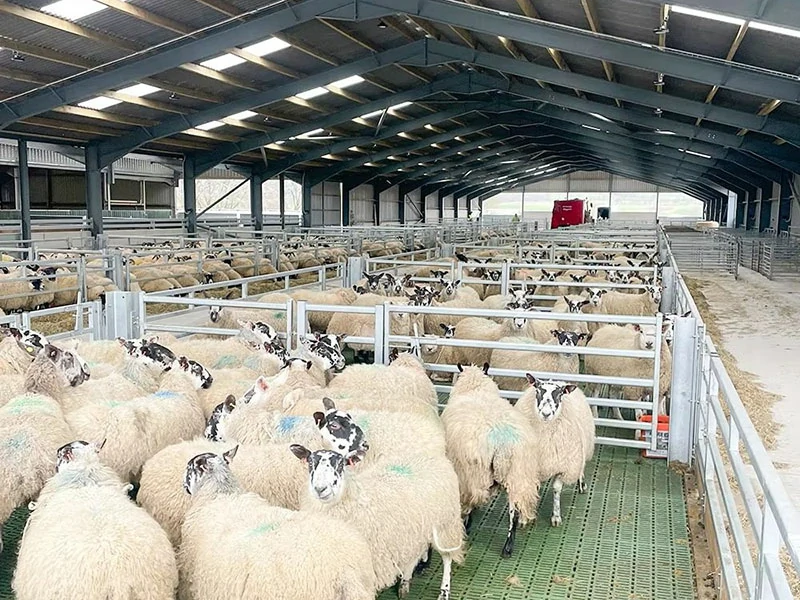
Steel structure farm feature stable structure, strong wind‑snow resistance, long service life, quick construction and flexible thermal insulation. Hot‑dip galvanized steel ensures corrosion resistance against ammonia and moisture, with spacious interior for good ventilation and easy sanitation. During construction, proper foundation treatment, anti‑corrosion measures, structural bracing, drainage design and supporting facilities installation are essential for safe and durable operation.
Contents
I. Core Advantages
Stable Structure & Strong Wind‑Snow Resistance
Made of hot‑dip galvanized steel, the frame features high rigidity, resisting strong winds, heavy snow and rain without deformation or collapse, ideal for large‑scale breeding of chickens, ducks, geese, cattle, sheep and pigs. With proper maintenance, its service life reaches 15–25 years, much longer than bamboo or wooden greenhouses.
Fast Construction & Controllable Cost
Prefabricated components are assembled on‑site without complex civil engineering. A 1,000‑square‑meter greenhouse can be completed in 7–15 days for quick production launch. Standardized mass construction is available, with easy expansion and reconstruction for connected or multi‑layer greenhouses.
Good Ventilation & Lighting for Livestock Health
Large span and few internal pillars create spacious interior for feeding, manure cleaning and vehicle access. Equipped with sun panels/films, ventilation windows, water curtains and fans, it delivers efficient ventilation, heat dissipation and dehumidification, reducing respiratory and intestinal diseases.
Corrosion‑Resistant, Moisture‑Proof & Easy Sanitation
Hot‑dip galvanized steel resists corrosion from moisture, ammonia and manure. The interior has no dead corners; cement‑hardened floors enable convenient flushing and disinfection to cut bacterial growth.
Flexible Thermal Insulation for All Climates
Rock wool insulation, double‑layer films and rolling curtains can be installed for winter warmth in northern areas and summer heat insulation in southern regions. Good airtightness allows precise control of temperature, humidity and ammonia concentration.
Cost‑Effective & Reusable
Steel components can be disassembled and reused with low demolition loss. Simple maintenance only requires paint repair and bolt tightening.
II. Construction Precautions (Key Tips to Avoid Pitfalls)
1. Foundation Construction
Compact the ground firmly; use concrete independent or strip foundations for soft soil to prevent settlement and tilting.
Embed anchor bolts accurately to ensure vertical steel columns and avoid framework distortion.
Choose high‑lying, well‑drained sites away from low‑lying waterlogged areas; dig drainage ditches outside the greenhouse.
2. Steel Materials & Anti‑Corrosion (Most Critical)
Adopt only hot‑dip galvanized steel; cold‑galvanized or ordinary painted pipes are prone to rust in ammonia‑rich, humid breeding environments.
Use thick square/round tubes for main beams and columns: columns ≥80×80mm square tubes for 8–12m spans.
Re‑galvanize or paint welded joints and cut sections, the most rust‑prone areas.
3. Structure & Safety
Install diagonal braces and cross bracings for wind resistance; add extra supports in windy areas.
Design roof slope at 15°–25° for water drainage and snow sliding to avoid collapse under snow load.
Tighten all bolts with lock nuts; do not skimp on fasteners.
4. Film & Covering Materials
Prioritize anti‑aging PO film or black‑and‑white film resistant to ammonia and UV rays, with a service life of 3–5 years.
Leave air layers between double‑layer films to double thermal insulation; add rock wool insulation in northern regions.
Stretch and fix films tightly with pressure strips to prevent tearing by strong winds.
5. Breeding‑Supporting Facilities
Reserve positions in advance for vents, water curtains, fans, feed troughs, manure ditches and power cables.
Run wires through conduits away from wet ground with leakage protection.
Slope the floor at about 2% for sewage and manure discharge.
6. Drainage & Environment
Keep surrounding drainage ditches unobstructed to prevent rainwater backflow and indoor dampness.
Set reasonable spacing between greenhouses for ventilation and lighting to avoid cross‑infection.