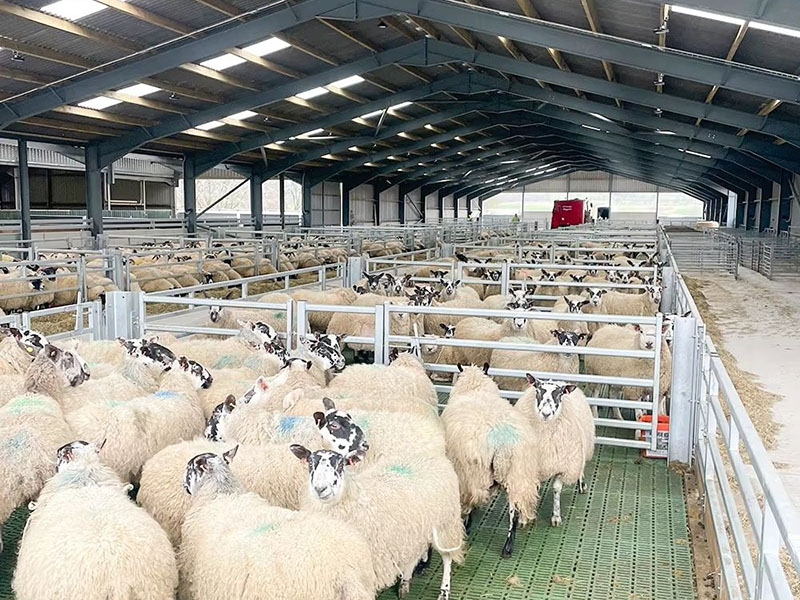


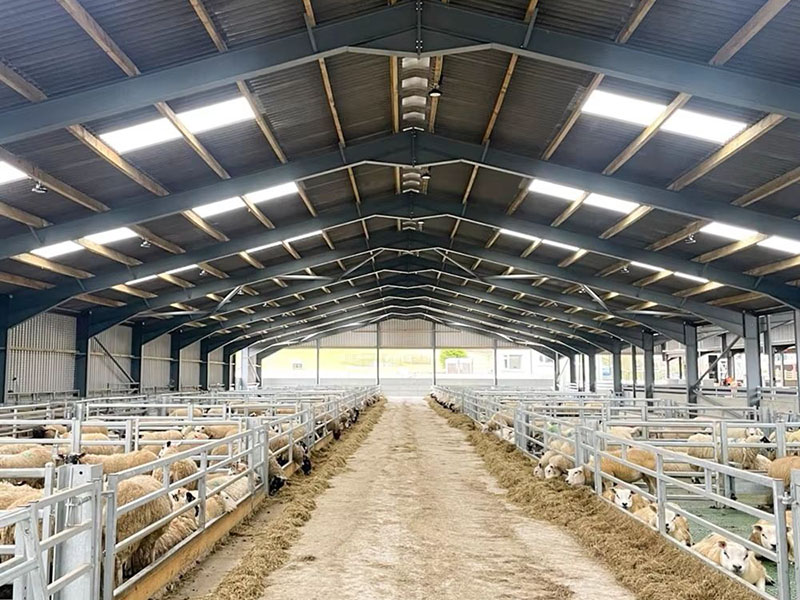
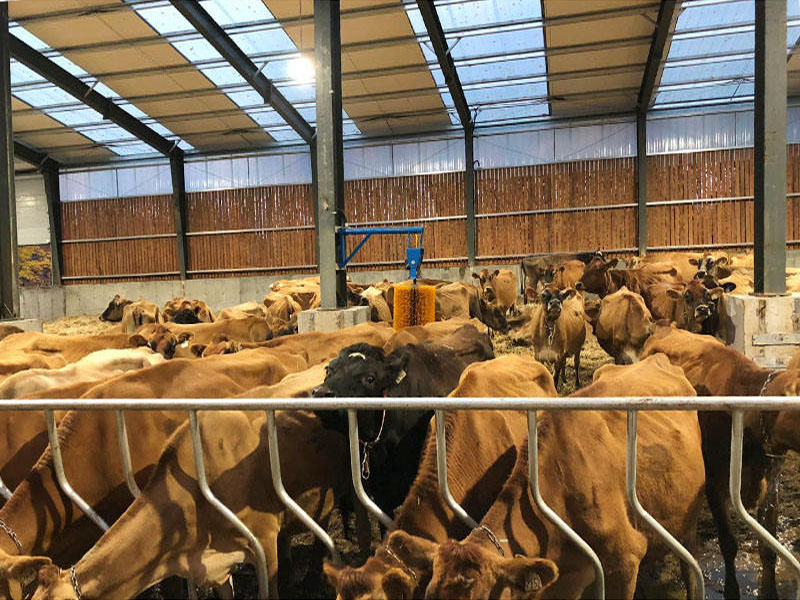

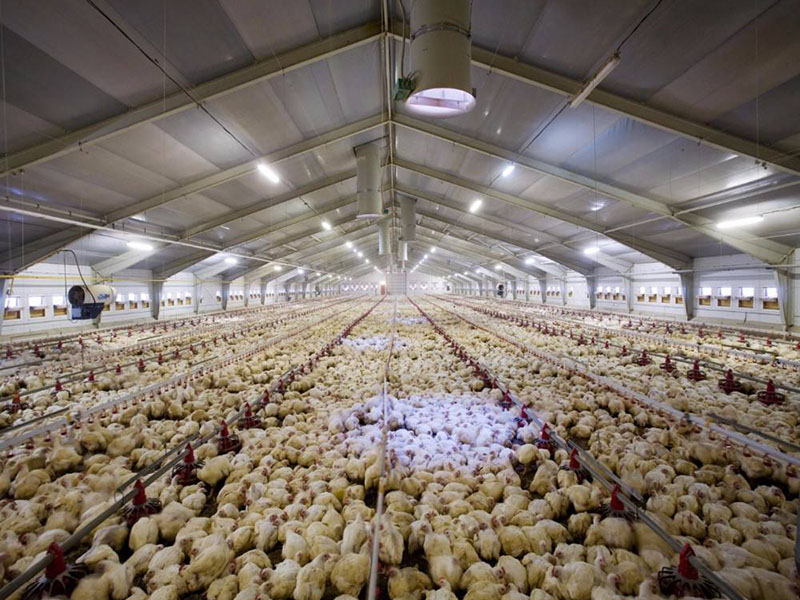
Its core structure is designed around breeding needs: the load-bearing system mainly uses light-weight H-shaped steel and C-shaped steel as the main components to build stable frame structure. Some large-span breeding sheds are equipped with steel purlins to strengthen the support of the roof, ensuring that it can bear the load of the roof layer, ventilation equipment, and rain and snow. The enclosure system focuses on practicality, with walls and roofs mostly made of sandwich color steel plates (the inner layer is rock wool or extruded board), which not only meets the needs of winter insulation and summer heat insulation but also resists external wind and rain. At the same time, ventilation and drainage outlets can be reserved according to the types of breeding. A poultry breeding farm will set up adjustable louver windows on the side walls, while a pig breeding farm will install ventilators on the roof. The foundation part mostly uses concrete short column foundation, which is connected with steel components through embedded parts, taking into account the functions of load-bearing moisture-proofing, avoiding the impact of ground moisture on the breeding environment.
| 1.Product name | Cheap steel structure farm building |
| 2.Application | Broiler house, layer house, breeding house, brood house etc |
| 3.Frame type | Portal frame or steel roof truss |
| 4.Main steel frame | H beam or square pipe with anti-rust paint or hot dip galvanized |
| 5.Roof &cladding | 75mm Glass wool sandwich panel composite on site |
| 6.Door | Special insulation door for poultry house |
| 7.Window | Plastic steel sliding window |
| 8.Brick wall | 300mm,500mm,800mm |
Product Advantages:
For breeding farms, shortening the construction cycle means entering the breeding cycle earlier and generating economic benefits faster. The “factory prefabrication -site assembly” model of steel structure breeding farms happens to solve the pain point of long construction period of traditional buildings. In the factory, core components such as steel columns, steel, and purlins can be processed through standardized production lines, which are not affected by the weather, and the processing accuracy error can be controlled within the millimeter level; being transported to the site, only bolt connection and local welding are needed to complete the assembly, without waiting for bricklaying and mortar curing as in masonry structures, without going through a long curing period as in concrete structures. The construction period of steel structure buildings from component production to completion only needs 2-3 months, which is 0%-60% shorter than that of traditional masonry structures. This not only reduces the initial investment cost such as site rental and labor management, but also helps breeders the market window period and avoid missing the breeding season due to delayed construction period.
Large-scale farming requires open and regular space to achieve equipment automation and intensive breeding. The structural characteristics of steel structure breeding farms perfectly meet this. Due to the high strength of steel, the cross-sectional size of steel components is much smaller than that of concrete columns and brick walls under the same load-bearing condition There is no need to set up dense load-bearing columns inside the factory building, which can form an open space with a span of 15-30 meters and unlimited. This unobstructed layout can make full use of the indoor area: for example, poultry farms can densely arrange layer chicken cages and duck cages, which can the breeding density by more than 30%; pig farms can flexibly divide functional areas according to the process of “farrowing shed – nursery shed – fattening shed, and can easily lay automatic feed lines, scraping boards, slatted floors and other automated equipment to reduce manual intervention and improve breeding efficiency. In addition, the storey height the steel structure factory building can be flexibly designed according to the demand, which can not only meet the ventilation and air change requirements, but also reserve space for the installation of ceiling pipelines in the later stage, and adapt to the breeding upgrade requirements of different stages.
Breeding farms are mostly built in suburban and rural areas, which are susceptible to natural disasters such as typhoons, heavy rainstorms and earthquakes. The structural stability of steel structure breeding farms can effectively reduce disaster losses. In terms of wind resistance, the high toughness of steel combined with the overall rigidity the frame can withstand the impact of typhoons of 10-12 grades, and the color steel plates fixed with bolts on the roof are not easy to be overturned strong winds, avoiding the problem of easy damage to traditional asbestos tiles and brick tiles. In terms of seismic resistance, the good ductility of steel structures can absorb energy through own deformation when an earthquake occurs, and they are not prone to brittle failure. Compared with masonry structures, they can better protect the livestock and poultry and equipment in the. In terms of resistance to rain and snow load, the steel purlins and roof support structures have strong load-bearing capacity, can withstand a snow load thickness of 5-100mm, and the roof design mostly adopts a drainage slope of 3%-5%, which, combined with eaves gutter and downspouts, can quickly rainwater, avoid water accumulation on the roof, and prevent damage to equipment and affect the breeding environment.
Adaptable and easily modified: Steel has strong malleability, allowing for customizing details such as height and spacing during construction according to the needs of different livestock categories, such as pigs, poultry, and beef cattle. If there is a need to adjust the livestock category or expand scale in the future, there is no need for a complete demolition. Instead, by adding or modifying steel components, the space can be reconstructed, significantly reducing the cost of secondary construction adapting to dynamic adjustments in farming models.